Top 10 Camel Milk Benefits for Health and Wellness
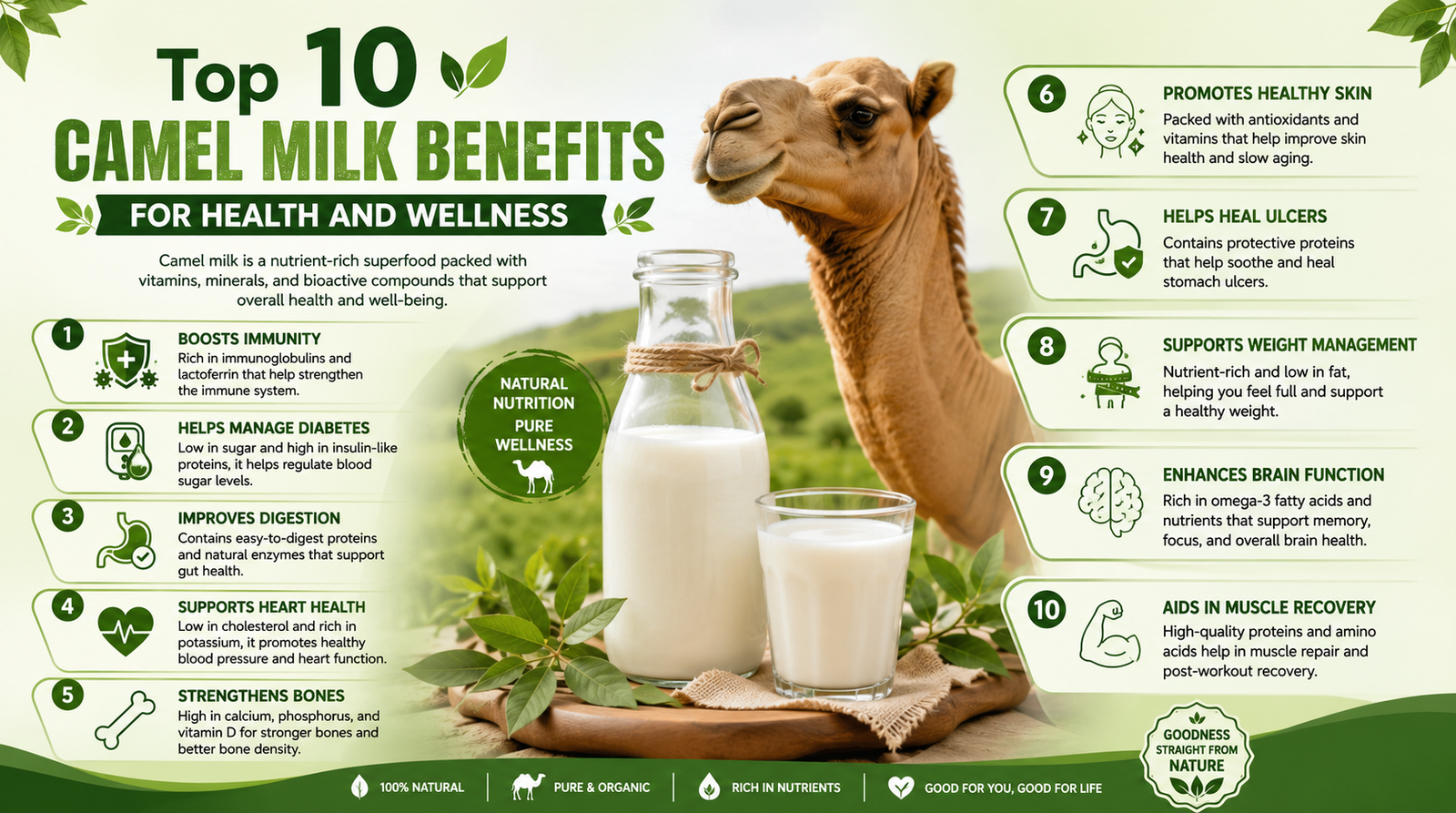
Camel milk is famous all over the world. People are curious about its taste. This milk layer is thinner compared to cow milk. These carry a combination of vitamins, minerals, and proteins. You will drink the daily milk to provide healthy bones and muscles. It also shinny your skin. We will explain the top 10 benefits of camel milk. We will also compare regular dairy products and some questions people ask before trying it.
What Makes This Milk Different
Camel milk has a salty flavor and is thinner. Goat and cow milk are evaluated, but the flavor is not the primary issue. The true benefit resides in its nutritious makeup.
Camel milk is naturally lower in fat and lactose. It contains higher levels of vitamin C, iron, and B vitamins. It also has unique proteins not found in regular dairy. These proteins are believed to be behind many of its health effects.
1. Supports a Strong Immune System
One of the main reasons why individuals turn to this milk is immune support. It contains naturally produced antibodies called immunoglobulins. These are thinner than the ones found in cow milk, which means the body takes them more easily.
These antibodies help the body respond to viruses and bacteria. Many people drink a glass during cold and flu season. Others use it as a daily habit to keep their immune system steady throughout the year.
2. Good for Diabetes Management
This may constitute the most researched advantage. There are molecules in camel milk that resemble insulin. Compared to plant-based hormone sources, these proteins survive the digestive process better. As a result, they might improve the body’s ability to control blood sugar.
Regular intake of this milk has been linked to decreased fasting blood sugar levels, according to a number of minor clinical studies. Some people with type 1 and type 2 diabetes have reported needing smaller levels of insulin after adding it to their diet. It might be useful in conjunction with a doctor’s plan, but it shouldn’t take the place of medication.
3. Easier to Digest Than Cow Milk
A significant portion of people worldwide suffer from lactose intolerance. Regular dairy often causes bloating, cramps, or discomfort. Camel milk contains less lactose and has a distinct sugar structure.
As a result, many people who are afraid of cow’s milk discover that they can eat this substitute without any problems. It also contains various casein proteins, which are frequently easier on the stomach. For those with a minor sense of sensitivity, this makes it an appropriate choice.
4. Rich in Essential Vitamins and Minerals
One glass of camel milk is a significant source of nutrition. It has a high vitamin C level—up to three times that of cow’s milk. It also provides vitamin B12, vitamin D, iron, and potassium.
These elements help everything from energy production to healthy blood cells. For people living in locations where fresh fruit is sparse, this milk has historically provided a vital source of vitamin C.
5. May Help with Autism Symptoms
One of the more interesting uses is this one. Some parents of children with autism have observed changes in behavior and communication after introducing this milk into their child’s diet. Its antioxidant qualities, which lessen oxidative stress in the brain, may be linked to this, according to researchers.
The studies on this area are currently restricted and tiny in scope. But the early results prompted more investigation. Families interested in trying this milk for this reason should still visit a pediatric doctor first.
6. Boosts Heart Health
Heart illness remains one of the biggest health concerns worldwide. This fresh milk may offer a degree of protection. Camel milk is inherently low in saturated fat, unlike full cow milk. Additionally, it has saturated fatty acids that help maintain average cholesterol levels.
According to some research, it might preserve healthy blood pressure while lowering LDL, sometimes known as bad cholesterol. This milk can be a heart-healthy complement to regular meals when paired with a balanced diet.
7. Supports Healthy Skin
Skin health starts from within, and nutrition plays a large role. The vitamin C, alpha hydroxy acids, and lanolin in this milk make it a popular ingredient in skincare products today. You will find it in soaps, creams, and even face masks.
Drinking it may also help from the inside. Its vitamins support collagen production, which keeps skin firm and hydrated. Many people notice smoother skin after weeks of consistent use.
8. Aids in Weight Management
People wanting to manage their weight typically look for foods that are nourishing but not high in calories. Camel milk is a good fit for that description. While having less fat by nature than whole cow’s milk, it still contains protein that makes you feel full.
Protein slows down digestion and reduces the appetite between meals. One easy strategy to cut daily calorie intake without feeling starved is to swap this milk with a high-fat dairy alternative.
9. Strengthens Bones and Teeth
Calcium and phosphorus are essential for strong bones. Camel milk contains both in meaningful amounts. It also has magnesium, which helps the body absorb calcium more efficiently.
Regular use may support bone density over time, particularly for people who are lactose intolerant and have limited dairy options. Strong bones reduce the risk of fractures and support long-term mobility as people age.
10. Improves Overall Gut Health
Digestion is just one aspect of a healthy digestive tract. Immunity, mood, and skin health are all impacted. Camel milk delivers natural probiotics and nutrients that promote a balanced digestive environment.
They promote the growth of good bacteria and aid in the more effective digestion of food. This can eventually result in improved food digestion, reduced bloating, and increased absorption of nutrients from other meals.
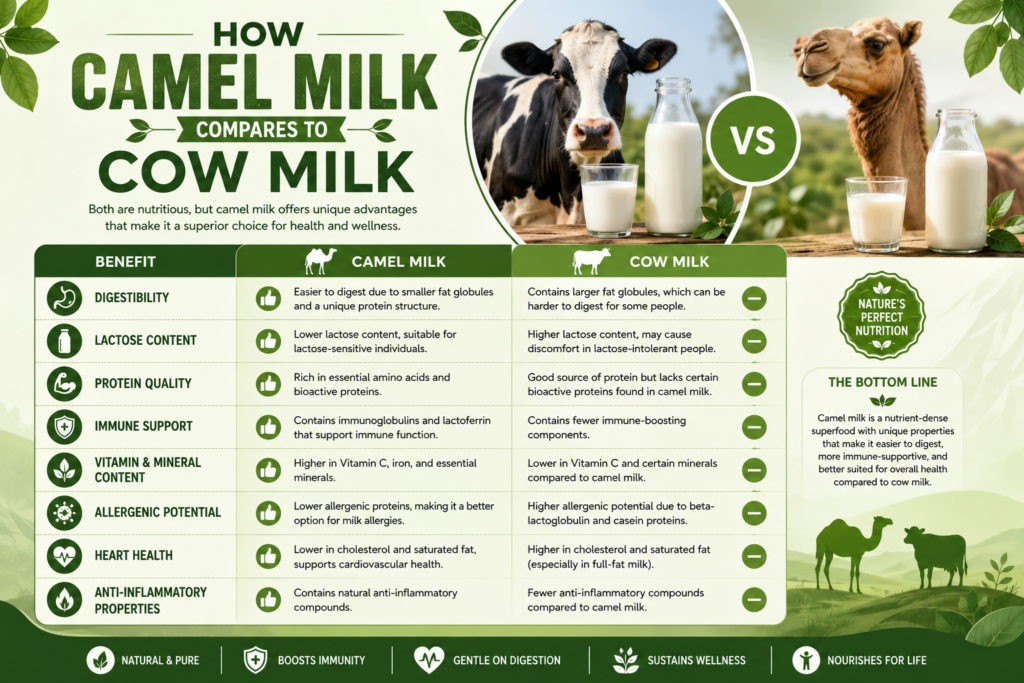
How Camel Milk Compares to Cow Milk
When placed side by side, the differences are clear. Camel milk has less fat, less lactose, and more vitamin C than cow milk. It also contains unique immune-boosting proteins that cow milk does not have.
However, cow milk still has higher calcium content in some cases and is more widely available. The choice often comes down to personal health needs. People with lactose sensitivity, diabetes, or immune concerns may benefit more from switching to this alternative.
How to Add It to Your Diet
You do not need to overhaul your entire diet to enjoy the benefits of this milk. Start with a small glass in the morning. Some people prefer it in smoothies, where the taste blends well with fruit. Others use it in coffee or tea as a dairy substitute.
It is also available in powdered form for those who cannot access a fresh supply. This makes it easier to store and travel with, especially in regions where it is not sold locally.
Final Thoughts
The appeal of camel milk is not limited to the desert. It is supported by an increasing amount of contemporary research as well as centuries of traditional use. The advantages are numerous and useful, ranging from boosting the immune system to assisting with blood sugar regulation.
This milk is something to think about if you’re searching for a dairy alternative that gives more than simply flavor. Enjoy the healthful boost it adds to your daily routine, start slowly, and observe how your body responds.
Visit our website for more product information: freshmilk.ae
FAQS
Is this milk safe to drink daily?
Yes, for most healthy adults, a daily glass is considered safe. Start with a small amount to see how your body responds.
Does it taste like cow milk?
Not exactly. It has a lighter, slightly salty taste with a thinner texture.
Can children drink it?
Many children do drink it safely, but it is best to check with a doctor first, especially for very young children.
Where can you buy it?
It is available in speciality stores, health food shops, and online in both fresh and powdered forms.